HBO’s Dark Academia Thriller Imposter Signals a New Wave of Elite Campus Mysteries The halls of America’s most

# **HBO’s Dark Academia Thriller *Imposter* Signals a New Wave of Elite Campus Mysteries** The halls of America’s most prestigious universities have long been fertile ground for storytelling—where ambition, deception, and identity collide under the gilded pressure of legacy.
Now, HBO is betting big on a fresh twist: a high-stakes mystery series titled *Imposter*, developed by first-time writer Kalos Chu and executive produced by the Emmy-winning *The Penguin* showrunner Lauren LeFranc.
The project, quietly shopped in early August, landed at HBO after generating buzz in the competitive drama market, signaling a strategic push into the dark academia genre with a sharp, outsider-focused lens.
What makes *Imposter* stand out isn’t just its premise—a mysterious newcomer infiltrating an elite university—but the pedigree behind it.
Chu, a Harvard graduate with a background in film internships at Lucasfilm, brings an insider’s perspective to the world of Ivy League intrigue, while LeFranc, whose *The Penguin* proved HBO’s knack for blending prestige and intrigue, will lend her signature precision.
The show’s arrival also marks a pivotal moment for HBO’s TV division, which has been aggressively courting fresh voices while doubling down on limited-series storytelling.
With *The Penguin*’s critical and awards dominance still fresh in the industry’s mind, *Imposter* arrives as both a creative gambit and a calculated risk—a test of whether HBO can replicate that alchemy in a new genre.
The project’s journey from script to greenlight offers a rare glimpse into how modern prestige television is made.
Unlike the rapid-fire development cycles of streaming’s early days, *Imposter* was nurtured over months, shopped selectively, and ultimately chosen for its ability to tap into a cultural moment where distrust of institutions—and the people within them—runs deep.
The logline alone carries weight: an outsider navigating the cutthroat politics of an elite university, where loyalty is currency and secrets are weapons. It’s a setup that invites comparisons to *Sharp Objects*, *The White Lotus*, and even *Legion*, but with a younger, more digitally savvy protagonist at its core.
If it succeeds, it could redefine how audiences engage with campus dramas, moving beyond the familiar tropes of coming-of-age stories to something far more unsettling. --- ## **A Harvard Graduate and the Rise of the ‘Dark Academia’ Outsider** Kalos Chu’s path to *Imposter* is as much a story as the show itself.
A 2023 Harvard graduate with a background in film studies, Chu spent his early career in the trenches of Hollywood internships, including stints at Lucasfilm, where he absorbed the mechanics of storytelling from the ground up.
Unlike many screenwriters who emerge from MFA programs or industry connections, Chu’s entry point was academic—his time at Harvard, where he navigated the same kind of elite environment he now writes about, likely sharpened his instincts for the show’s central tension: the clash between the privileged and the outsider.
His debut script, *Imposter*, is not just a story about deception; it’s a meditation on what it means to belong in a world where the rules are written in bloodlines and old-money networks. What Chu lacks in industry experience, he makes up for in observational detail.
The script’s strength lies in its ability to balance psychological depth with the kind of razor-sharp dialogue that HBO audiences have come to expect.
Early descriptions suggest a protagonist who is neither hero nor villain but something more ambiguous—a figure caught between admiration for the system and fury at its exclusivity. This moral gray area is where *Imposter* could carve out its own space.
Dark academia has been mined extensively in literature and film, but television has yet to fully exploit its potential for sustained tension.
Shows like *Gossip Girl* and *Euphoria* flirted with the genre’s aesthetics, but *Imposter* aims to go deeper, exploring how elite institutions groom their own while systematically erasing those who don’t fit the mold.
The show’s setting—a unnamed but unmistakably Ivy League university—isn’t just a backdrop; it’s a character. The script’s treatment of the campus as a pressure cooker of social engineering is a deliberate choice, one that aligns with Chu’s likely firsthand experiences.
Harvard, with its legacy admissions, secret societies, and cutthroat networking, is the perfect Petri dish for a story about identity theft—not just of a person, but of an entire social contract.
The question *Imposter* must answer is whether it can sustain this tension across a full season, or if it will succumb to the genre’s pitfalls: either becoming too diffuse in its mystery or too predictable in its revelations.
Chu’s challenge is to make the audience care about a protagonist who, by definition, doesn’t belong—yet. --- ## **Lauren LeFranc’s HBO Gambit: Can *The Penguin*’s Magic Work Again?** For Lauren LeFranc, *Imposter* is the next chapter in a career that has already redefined what it means to be a showrunner in the streaming era.
Her breakout success, *The Penguin*, wasn’t just a critical darling—it was a cultural reset. The show’s 24 Emmy nominations in 2025, including wins for Cristin Milioti and a sweep of major acting categories, proved that HBO could still dominate the awards conversation with a limited series.
But *The Penguin* was also a departure: a grounded, character-driven superhero story that rejected the bombast of comic book adaptations in favor of quiet, psychological depth. Now, LeFranc is taking that same approach into uncharted territory—campus intrigue.
What makes LeFranc the perfect producer for *Imposter* isn’t just her track record but her ability to elevate material that could easily veer into cliché.
Her earlier work on *Agents of SHIELD* and *Chuck* demonstrated a knack for balancing genre expectations with fresh perspectives, while *Impulse*, her YouTube Premium series, showed her willingness to experiment with tone and format.
With *Imposter*, she faces a different kind of challenge: translating a writer’s debut into a polished, network-ready product. The pressure is on to avoid the pitfalls of other dark academia projects—where the setting becomes a gimmick rather than a crucible for conflict.
LeFranc’s strength lies in her ability to distill complex themes into tight, character-driven narratives, and if *Imposter* succeeds, it will be because she treats the university setting as more than just a backdrop but as a living, breathing antagonist.
The project also marks a strategic move for HBO, which has been quietly building its slate of original dramas outside the usual prestige warhorses of biopics and period pieces.
LeFranc’s overall deal, signed in 2025, was a clear signal that the network was investing in showrunners who could deliver both critical acclaim and audience engagement. *Imposter* fits that mandate perfectly: it’s a high-concept mystery with broad appeal, but one that also carries the potential for awards buzz.
The question is whether HBO will treat it as a limited series, like *The Penguin*, or commit to a full season—a decision that could hinge on how quickly Chu’s script evolves in development. --- ## **The Future of Campus Mysteries: Can *Imposter* Redefine the Genre?** If *Imposter* gets the greenlight to series, it won’t just be a test for Chu and LeFranc—it will be a referendum on whether dark academia can sustain itself as a television genre beyond its literary and cinematic roots.
The blueprint is there: *Sharp Objects* proved that family dramas could thrive in small-town settings, while *The White Lotus* showed that luxury vacations could be breeding grounds for psychological horror. But universities, with their built-in hierarchies and historical baggage, offer a different kind of tension.
The key will be avoiding the trap of making the mystery too cerebral or the characters too one-dimensional. Audiences crave stakes, and in *Imposter*, the stakes aren’t just personal—they’re systemic.
One of the show’s greatest strengths could be its protagonist. Unlike the typical dark academia hero—a disaffected rich kid or a genius outsider who eventually assimilates—*Imposter*’s lead is someone who doesn’t just observe the system but actively manipulates it.
This inversion of power dynamics could be the hook that keeps viewers invested. The challenge will be maintaining that tension as the season progresses.
Mysteries, by nature, require careful pacing, and if the reveal feels too neat or the characters too predictable, the show risks fading into obscurity.
But if Chu and LeFranc pull it off, *Imposter* could become the blueprint for a new wave of elite campus stories—ones that don’t just exploit the setting but interrogate it. The industry is already watching closely.
With Netflix’s *One Piece* and Apple TV+’s *Shrinking* proving that high-concept mysteries can thrive in unexpected places, HBO has an opportunity to claim the dark academia space as its own.
The network’s history of nurturing risky, character-driven projects—from *The Leftovers* to *Succession*—suggests it won’t shy away from taking chances. But *Imposter*’s success won’t be guaranteed by pedigree alone.
It will depend on whether Chu can deliver a script that feels both fresh and familiar, and whether LeFranc can assemble a cast that brings the same magnetic energy she found in *The Penguin*’s ensemble. For now, the project remains in development, with no official announcement yet.
But the pieces are in place: a writer with a personal stake in the material, a producer with a proven ability to elevate it, and a network willing to bet on a genre that’s ripe for reinvention.
If *Imposter* lands, it won’t just be another campus story—it could be the one that finally cracks the code on how to make dark academia work for television.
Fisun Yıldırım
This article was prepared for publication by HotStar Daily and checked for publication requirements under our editorial standards. We review available information and correct material errors when they are identified.
Quick Answers
- What is the latest update on this story?
- HBO’s Dark Academia Thriller Imposter Signals a New Wave of Elite Campus Mysteries The halls of America’s most prestigious universities have long been fertile ground for storytelling—where ambition,
- Who is this story about?
- This article covers developments related to HBO’s Dark Academia Thriller Imposter Signals a New Wave of Elite Campus Mysteries The halls of America’s most. HotStar Daily's editorial team monitors the story and updates the article as new verified information becomes available.
- Where can I read more about Dark?
- HotStar Daily publishes original reporting on Dark and related entertainment news. Visit the homepage or browse the section dedicated to this story for the latest coverage.
Related topics
More From This Section
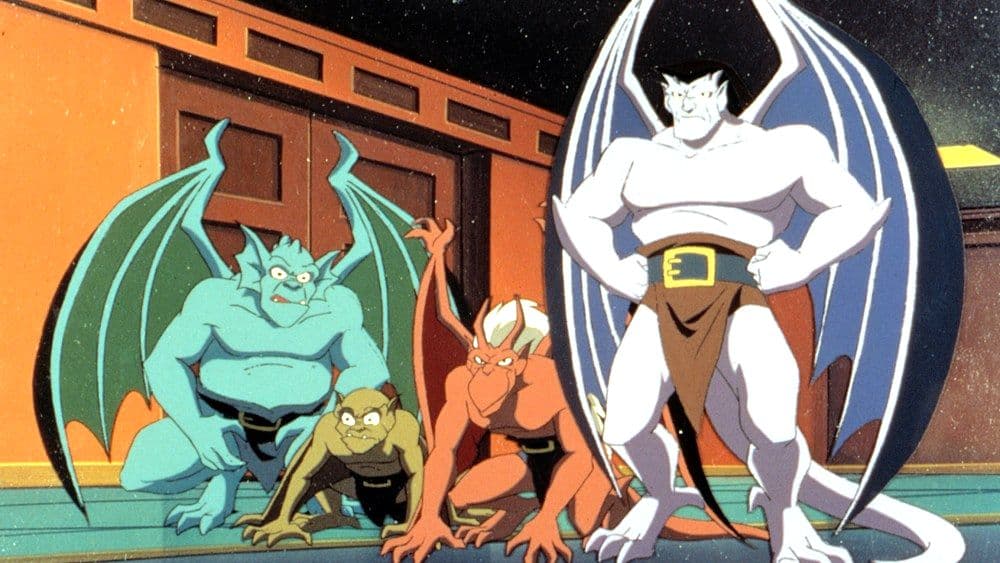
After years of rumors, Disney’s live-action *Gargoyles* reboot is dead—leaving fans of the gothic, morally complex ‘90s classic in limbo as animation remains the only hope for revival.
Disney Kills Gargoyles Live-Action Reboot—Why This ‘90s Dark Fantasy Stayed Cursed

Sidney Starr’s Legal Battle Takes a Dark Turn as Prosecutors Seek to Shield Teen Accuser’s Past The case against Love & Hip Hop star Sidney Starr has always been explosive, but this week, the legal b
Sidney Starr’s Legal Battle Takes a Dark Turn as Prosecutors Seek to Shield Teen Accuser’s Past The case against Love &
Netflix has dipped its toes further into the youthful drama space with an order for the gothic romance series 'Sid & Zoey'. The show, a joint production by Blumhouse Atomic Monster and Bad Robot, hail