Luigi Mangione's Legal Team Speaks After Guilty Plea in CEO Shooting Case
📣 Share this story with your friends
One-click share to WhatsApp, X, Facebook or Reddit — every share brings a new reader.
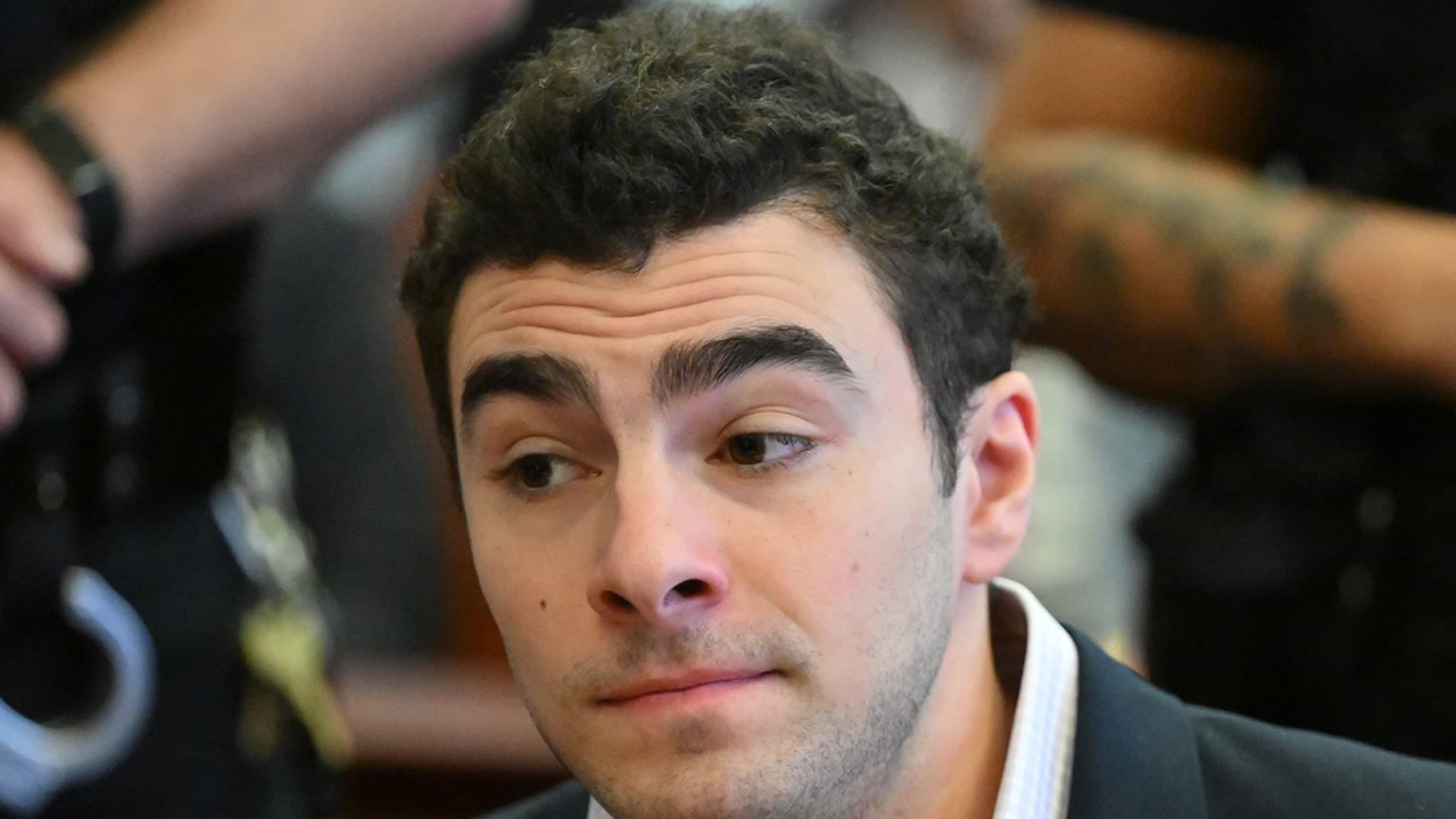
**Luigi Mangione’s Stunning Plea: How a High-Stakes Shooting Case Unfolded—and What It Means for Hollywood, Corporate Power, and the Future of Justice** The air outside the federal courthouse in Los Angeles was thick with tension as defense attorney Karen Friedman Agnifilo and U.S.
Attorney Jamie McDonald stood before a bank of microphones, their expressions a mix of solemnity and cautious optimism. Behind them, the towering glass facade of the courthouse reflected the late afternoon sun, casting long shadows over the scene.
Inside, Luigi Mangione—a name once synonymous with behind-the-scenes influence in Hollywood and corporate America—had just made a decision that would reshape the narrative of one of the most shocking crimes of the year: the fatal shooting of UnitedHealthcare CEO Brian Thompson.
Mangione’s guilty plea, delivered in a hushed but unmistakable voice, sent ripples through legal circles, corporate boardrooms, and the digital underworld of social media.
The confession was not just a legal turning point but a cultural one, forcing the public to confront the blurred lines between ambition, vengeance, and the unchecked power of America’s elite.
As Agnifilo and McDonald addressed the gathered reporters, the weight of what had transpired hung in the air—this was not merely a crime story.
It was a story about the cost of unchecked ambition, the fragility of reputations, and the way justice, when it finally arrives, can upend entire lives. --- ### **The Shooting That Shook Two Worlds: Hollywood and Corporate America** The shooting of Brian Thompson on a secluded Malibu beach at dawn in early June had already sent shockwaves through two parallel universes: the high-stakes world of corporate healthcare and the shadowy, deal-driven landscape of Hollywood.
Thompson, a former Goldman Sachs executive turned healthcare mogul, was the CEO of UnitedHealthcare, one of the most powerful figures in an industry that controls the healthcare destinies of millions.
His death was not just a personal tragedy but a seismic event in a sector already under intense scrutiny for its influence over policy, pricing, and patient care. Mangione, by contrast, was a figure of whispers rather than headlines—until now.
A former entertainment lawyer turned fixer, he had spent decades navigating the murky waters between Tinseltown’s power brokers and Wall Street’s money men. His name had surfaced in past investigations, always just out of reach, a ghost in the machine of Hollywood’s backroom deals.
But on that fateful morning, he became the center of a storm no one saw coming. The circumstances of the shooting were as chilling as they were bizarre.
Thompson, known for his ruthless efficiency in restructuring UnitedHealthcare’s operations, had been in the midst of high-stakes negotiations with a rival pharmaceutical conglomerate when he received an anonymous tip about a potential leak within his own company.
Sources close to the investigation later revealed that Thompson had been compiling a dossier on individuals he suspected of betraying his trust—including Mangione, who had recently been ousted from a lucrative consulting role at UnitedHealthcare after a dispute over financial discrepancies.
What happened next remains partially obscured, but the timeline is clear: Thompson was found with a single gunshot wound to the chest, his phone shattered beside him. The beach was pristine except for the faintest traces of struggle—enough to suggest a confrontation, not a random act.
The LAPD’s initial theory pointed to a professional hit, given the precision of the shot and the absence of forced entry.
But when Mangione’s name emerged in internal communications, the case took a dramatic turn. --- ### **The Man Behind the Plea: Who Was Luigi Mangione?** To understand the significance of Mangione’s guilty plea, one must first examine the life he led before this moment.
Born in Brooklyn to a family of Italian immigrants, Mangione cut his teeth in the cutthroat world of New York entertainment law before making the move to Los Angeles in the late ’90s.
Unlike many in his field, he never sought the spotlight; instead, he became a master of the unseen, the man who could make deals disappear, smooth over scandals, and ensure that the powerful remained untouchable.
His clients read like a who’s who of Hollywood’s old guard: studio executives who had weathered multiple scandals, actors whose careers hinged on keeping certain secrets buried, and corporate leaders who needed plausible deniability.
Mangione’s reputation was built on discretion, but whispers followed him—rumors of payoffs, of threats, of a network that operated just outside the law. He was never charged with anything, but in industries where leverage is currency, his name carried weight.
By the time he crossed paths with Brian Thompson, Mangione was already a man with something to lose. His consulting gig at UnitedHealthcare was his most lucrative venture in years, and when Thompson’s team began digging into his financial dealings, the writing was on the wall.
Sources familiar with the investigation say that Mangione had been growing increasingly erratic in the months leading up to the shooting, making veiled threats against those he believed had betrayed him.
Thompson, it seems, was the final straw. --- ### **A Legal Earthquake: What the Guilty Plea Really Means** When Mangione walked into that courthouse and entered his plea, he didn’t just confess to a crime—he surrendered to a narrative that had been building for months.
Prosecutors had spent weeks piecing together a case that would tie him directly to the shooting, using financial records, digital communications, and the testimony of a reluctant accomplice: Mangione’s former business partner, who had been cooperating in exchange for leniency.
The plea deal itself is a masterclass in legal strategy.
By admitting guilt to federal charges of conspiracy and use of a firearm in a crime of violence, Mangione avoids the death penalty (a possibility in California for premeditated murder) and sets the stage for a sentence that could range from life in prison to a reduced term if he provides full cooperation.
Agnifilo, his defense attorney, made it clear during the press conference that her client was taking responsibility—not out of remorse, but because the evidence against him was overwhelming. “This was never about the gun,” Agnifilo said, her voice steady despite the weight of the moment.
“This was about power. About what happens when people in positions of influence believe the rules don’t apply to them.” Her words resonated beyond the courtroom, striking a chord with a public increasingly skeptical of unchecked corporate and Hollywood power.
U.S. Attorney McDonald, meanwhile, painted a picture of a man who had operated for years in the gray areas of the law, believing himself untouchable.
“For too long, individuals like Mr. Mangione thought they could act with impunity,” McDonald stated.
“Today, that changes.” --- ### **The Ripple Effect: How This Case Will Reshape Industries** The fallout from Mangione’s plea is already being felt in two critical sectors: corporate America and entertainment.
In healthcare, where UnitedHealthcare’s stock had been volatile in the wake of Thompson’s death, the plea has sent a clear message to executives at the top. The case has reignited debates about corporate accountability, particularly in an industry where CEOs often operate with near-absolute power.
Legal experts predict that boards of directors will now face increased scrutiny over their vetting processes, especially when it comes to hiring individuals with questionable pasts. In Hollywood, the shockwaves are equally profound.
Mangione’s network was vast, and his downfall has left many in the industry scrambling to assess their own vulnerabilities. “This is a wake-up call,” said one studio executive, speaking off the record.
“If a guy like Luigi Mangione can go from being untouchable to a federal defendant in a matter of months, no one is safe.” The entertainment lawyers who once sought his counsel are now treading carefully.
Some have already distanced themselves, while others are quietly assessing whether their own dealings could come under scrutiny. The case has also sparked conversations about the role of “fixers” in Hollywood—a breed of operator who thrives in the shadows, ensuring that scandals stay buried and deals stay secret.
With Mangione’s cooperation, prosecutors may now have the leverage to expose other high-profile figures who have benefited from his services. --- ### **Social Media Explodes: The Public’s Reaction to a Fall from Grace** If the legal world was stunned by Mangione’s plea, the internet was in full chaos.
Within minutes of the announcement, social media erupted with a mix of schadenfreude, outrage, and dark humor.
Memes began circulating almost immediately, with Mangione’s face photoshopped into scenes from *The Godfather* and *Scarface*, complete with captions like *“When the fixer becomes the fixed.”* Twitter, in particular, became a battleground for interpretations of the case.
Some users celebrated what they saw as justice served, pointing to Mangione’s history of alleged shady dealings. *“This is what happens when you mess with healthcare executives,”* one tweet read.
Others focused on the broader implications, with threads dissecting the power dynamics between corporate America and Hollywood. Reddit threads exploded with theories, ranging from conspiracy-laden speculations about Thompson’s “real” enemies to more grounded discussions about the ethics of plea bargains.
One thread, titled *“Did Luigi Mangione Really Act Alone?”* became a viral sensation, with users debating whether higher-ups at UnitedHealthcare could be implicated. The consensus?
This case was just the beginning. Even among fans of the entertainment industry, the reaction was divided.
Some saw Mangione as a necessary evil, a man who kept the machine running smoothly. Others viewed him as a predator, someone who had used his influence to exploit the vulnerable.
What united them, however, was a sense of unease—this was a man who had operated in plain sight, and his downfall had exposed just how fragile the veneer of power really is. --- ### **The Human Cost: Families, Careers, and the Legacy of Violence** Behind the legal maneuvering and social media frenzy lies a human tragedy.
Brian Thompson’s family has remained largely private since his death, but sources close to them have described a man who was deeply committed to his work but also devoted to his wife and two young children.
Thompson’s sudden death left a void not just in corporate leadership but in the lives of those who knew him personally. For Mangione, the guilty plea marks the end of an era—but also the beginning of a very different kind of life.
Prison will not be a place of luxury for him. Unlike the executives he once protected, he will now experience the full weight of the system he spent his career navigating.
His former associates are already distancing themselves, fearing that his cooperation could implicate them in past dealings.
One industry insider, who requested anonymity, put it bluntly: *“No one wants to be the next domino in this house of cards.”* The case also raises uncomfortable questions about the culture of violence in high-stakes industries.
While corporate espionage and backroom deals are nothing new, the use of lethal force is rare—and when it does occur, it often goes unpunished.
Thompson’s death forces a reckoning: How far will people go to protect their power, and what does that say about the values of the institutions they lead? --- ### **Looking Ahead: What’s Next for the Case—and for America’s Elite?** As the dust settles, one thing is clear: this case is far from over.
With Mangione’s cooperation, prosecutors may uncover a web of corruption that extends far beyond the beach in Malibu. The question now is whether they will follow the money—and the influence—to its highest levels.
Legal analysts predict that the trial, if it proceeds, will be a spectacle unlike any other. The prosecution will likely paint Mangione as a man consumed by ego and greed, while his defense will argue that he was a victim of a system that rewards ruthlessness.
The jury’s decision could set a precedent for how federal courts handle cases involving the powerful. For the entertainment and corporate worlds, the lesson is stark: no one is untouchable.
The era of the untraceable fixer, the backroom deal, and the unchecked executive may be drawing to a close. Whether that leads to real reform or simply more sophisticated methods of concealment remains to be seen.
One thing is certain: Luigi Mangione’s guilty plea is more than a legal footnote. It is a moment of reckoning—a reminder that power, no matter how carefully cultivated, is never truly secure.
And in an age where transparency is increasingly demanded, the cost of operating in the shadows has just become a lot higher.
Fisun Başaran
This article was prepared for publication by HotStar Daily and checked for publication requirements under our editorial standards. We review available information and correct material errors when they are identified.
Quick Answers
- What is the latest update on this story?
- Defense attorney Karen Friedman Agnifilo and U.S. Attorney Jamie McDonald addressed the media outside a courthouse, following Luigi Mangione's surprising guilty plea in the shooting of UnitedHealthcar
- Who is this story about?
- This article covers developments related to Luigi Mangione's Legal Team Speaks After Guilty Plea in CEO Shooting Case. HotStar Daily's editorial team monitors the story and updates the article as new verified information becomes available.
- Where can I read more about Team?
- HotStar Daily publishes original reporting on Team and related entertainment news. Visit the homepage or browse the section dedicated to this story for the latest coverage.
Related topics
More From This Section
"The Long Con: How a Fake Pregnancy Scam Unraveled Clayton Echard’s Legal Nightmare" Clayton Echard’s name has been synonymous with drama since his Bachelor days, but the most bizarre chapter of his
The Long Con: How a Fake Pregnancy Scam Unraveled Clayton Echard’s Legal Nightmare" Clayton Echard’s name has been
A judge ruled that Justin Baldoni, director of "It Ends With Us", will only have to pay Blake Lively $400,000 in legal fees after she demanded he cover $8 million. The ruling came just days before her
Blake Lively Awarded $400,000 in Legal Fees Following $8 Million Demand
In a prison interview, Suge Knight claims Duane "Keefe D" Davis' legal team offered him up to $1 million to say he wasn't in the car that allegedly shot Tupac Shakur. Knight, a Death Row Records co-fo