Stalking Plea Shakes Up Luigi Mangione's Murder Case
📣 Share this story with your friends
One-click share to WhatsApp, X, Facebook or Reddit — every share brings a new reader.
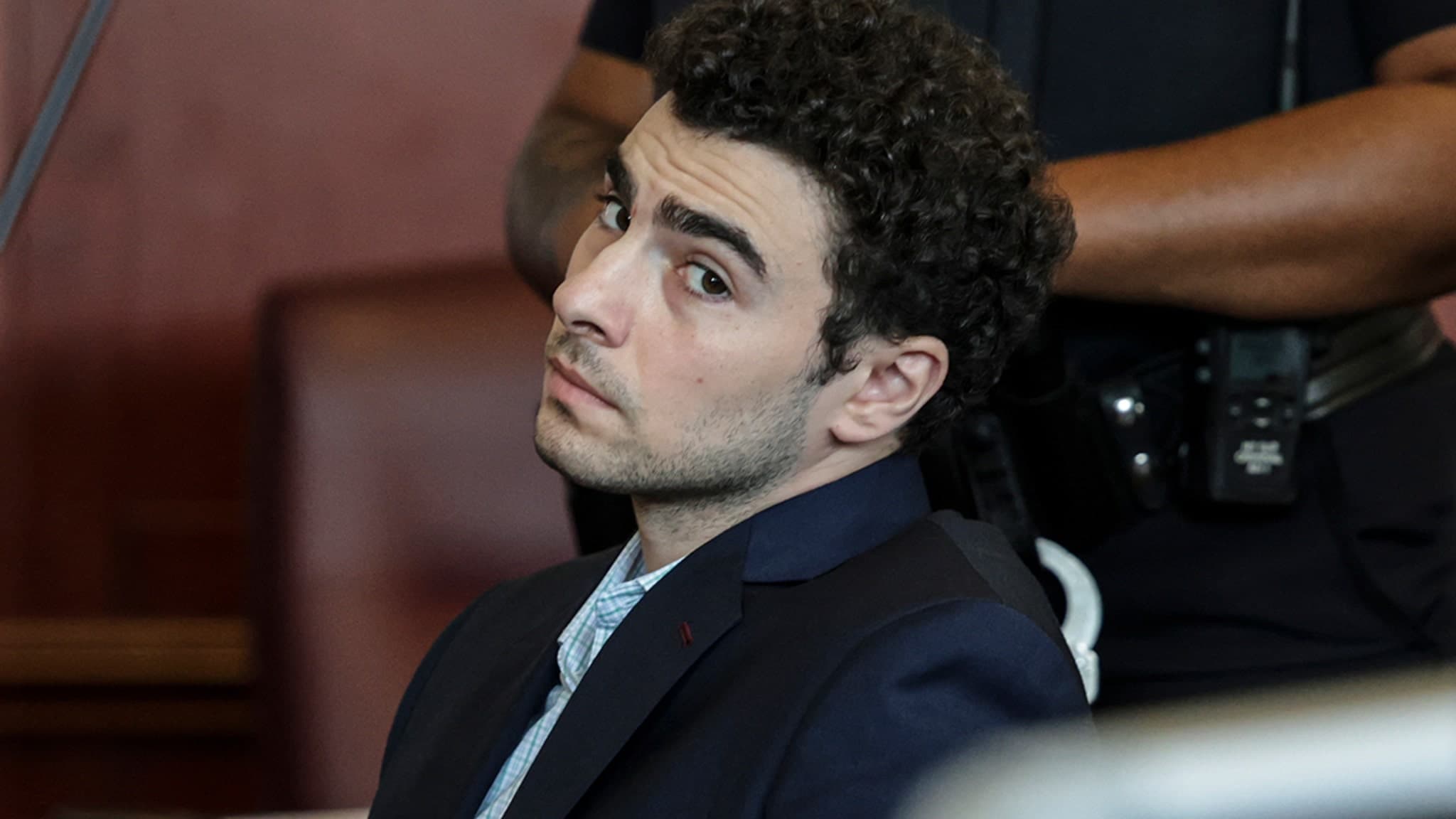
**Luigi Mangione’s Stalking Plea Unravels High-Stakes Murder Case: A Legal Gambit with Far-Reaching Consequences** The federal courtroom in Manhattan was uncharacteristically still on Monday as Luigi Mangione, once a rising star in the world of celebrity activism, stepped forward to deliver words that would reverberate far beyond the courtroom walls.
With a voice steady but strained, he admitted guilt in the shooting death of UnitedHealthcare CEO Brian Thompson—a confession that sent shockwaves through the legal system, shattered the family of the victim, and left fans, critics, and industry insiders grappling with the implications of a case that had already become a cultural flashpoint.
Mangione’s plea—guilty to federal charges of interstate stalking resulting in death—was not just a legal maneuver but a seismic shift in a murder trial that had been poised to become one of the most closely watched of the year.
His admission, delivered in a courtroom packed with reporters and family members of Thompson, was raw and unfiltered: *"After years of enduring pain from a broken back, I shot Mr. Thompson, and he died.
I knew what I was doing was illegal."* The words hung in the air, a stark contrast to the defiant "not guilty" plea he had entered in his New York state murder trial just weeks earlier.
The federal plea, if it holds, could derail that trial entirely, raising the specter of double jeopardy—a legal principle that could prevent New York from prosecuting him for the same act. ### **A Case Built on Controversy and Celebrity** Luigi Mangione’s path to this moment was anything but ordinary.
Once a minor celebrity known for his outspoken critiques of corporate America—particularly in the healthcare industry—Mangione had positioned himself as a thorn in the side of powerful executives.
His activism, often amplified through social media, earned him a following among those disillusioned with Wall Street and Big Pharma. But his methods grew increasingly extreme, culminating in a deadly confrontation that has now exposed the dangerous intersection of celebrity, mental health, and unchecked rage.
The shooting of Brian Thompson, a UnitedHealthcare executive, occurred in a private meeting in early 2025. Thompson, a mid-level manager with no prior public profile, became an unlikely victim in a case that quickly morphed into a high-stakes legal drama.
Prosecutors had painted Mangione as a dangerous man consumed by paranoia, while his defense team had framed him as a victim of systemic injustice—someone pushed to the brink by years of physical pain and corporate betrayal.
The federal plea complicates that narrative, forcing both sides to reassess their strategies. ### **The Legal Chessboard: Double Jeopardy and Mitigating Factors** Mangione’s federal plea was not a spontaneous decision.
Legal sources suggest that his legal team had been in negotiations with prosecutors for weeks, exploring a deal that would allow him to avoid a lengthy murder trial in New York.
The federal charges—interstate stalking resulting in death—carry a maximum sentence of life in prison, but prosecutors may be open to a reduced term if Mangione cooperates or provides insight into his state of mind at the time of the shooting.
The most immediate consequence of the plea is the potential for double jeopardy to shield Mangione from New York’s murder charges.
If the federal government proceeds with sentencing, New York may be barred from retrying him for the same act—a legal principle that could spare him from a state trial where prosecutors were expected to seek a harsher penalty. However, this is far from guaranteed.
Legal experts warn that the double jeopardy argument is complex, particularly given that the federal and state charges stem from the same criminal act. A judge will ultimately decide whether the plea bars further prosecution.
If the state case does proceed, Mangione’s defense team may pivot to an "extreme emotional disturbance" defense—a strategy that could have been risky in the federal context but is now unburdened by concerns about how it might affect his federal sentencing.
The defense has already hinted at exploring Mangione’s chronic pain, his history of activism, and his belief that corporate executives like Thompson were symbols of a broken system.
Whether a jury will sympathize with this argument remains an open question. ### **The Human Cost: Thompson’s Family and the Aftermath** For Brian Thompson’s family, the plea was a bitter pill. They had spent months preparing for a murder trial, hoping for justice in the face of an act that left them reeling.
Thompson, a father of two, was not a public figure, yet his death has been overshadowed by the spectacle of Mangione’s celebrity.
The family, who attended the federal hearing, left in silence, their grief compounded by the realization that the man who took their loved one’s life would likely face consequences—but not the full measure of the law. The case has also forced a reckoning with the darker side of celebrity activism.
Mangione’s rise was fueled by a mix of genuine grievances and performative outrage, a blend that resonated with many but also drew criticism from those who saw his methods as reckless. His targeting of corporate executives, while framed as a moral crusade, increasingly took on the hallmarks of obsession.
The federal charges of stalking—particularly the use of interstate facilities—suggest that his fixation on Thompson was not just ideological but deeply personal. ### **Industry and Cultural Fallout** The entertainment and corporate worlds are now left to grapple with the implications of this case.
For one, it raises questions about the limits of celebrity activism.
Mangione’s case is not the first time a public figure’s crusade has crossed into dangerous territory—think of the late Heath Ledger’s erratic behavior in the years before his death, or the legal troubles faced by figures like Robert Downey Jr. in his early career.
But Mangione’s case is unique in its escalation to violence, forcing industries to confront how far they are willing to tolerate dissent when it turns deadly. In the corporate sector, UnitedHealthcare and other healthcare giants may face renewed scrutiny over their handling of public relations crises.
Thompson’s death, though tragic, was also a PR nightmare for a company already under fire for its business practices.
The case has reignited debates about corporate accountability, with some arguing that executives like Thompson were fair targets for Mangione’s ire, while others warn that vigilante justice has no place in a functioning society.
Culturally, the case has sparked a national conversation about mental health and the dangers of unchecked rage. Mangione’s attorneys have already signaled that they will explore his history of chronic pain and emotional distress, framing his actions as a cry for help rather than a premeditated crime.
Whether this narrative will resonate with jurors—or even with the public—remains to be seen.
But the case undeniably forces society to ask: How much responsibility do we bear for the actions of those who feel pushed to the edge? ### **The Road Ahead: What Happens Next?** With the federal plea in place, the legal battle is far from over.
A pre-sentencing report will be prepared, detailing Mangione’s background, mental state, and the circumstances of the shooting. A hearing on his mental competence may also be held, with psychologists likely to testify about whether his chronic pain and ideological beliefs impaired his judgment.
If double jeopardy does not shield him from the New York trial, the case could still proceed, though the dynamics would be drastically altered. Prosecutors may now focus on proving premeditation or malice, while the defense could double down on the emotional disturbance argument without fear of federal repercussions.
For Mangione, the plea may have been a calculated risk—a way to avoid a life sentence while still allowing him to present his side of the story.
But for Brian Thompson’s family, there is no victory in this moment, only the cold reality that justice, in its fullest sense, may never be served. ### **A Case That Defines an Era** Luigi Mangione’s story is more than a murder trial; it is a cautionary tale about the dangers of unchecked celebrity, the blurred lines between activism and obsession, and the human cost of corporate power.
As the legal proceedings unfold, one thing is certain: this case will be studied for years to come—not just as a legal precedent, but as a reflection of the times we live in.
In an era where outrage is currency and justice is often a spectator sport, Mangione’s plea forces us to confront uncomfortable questions: How far is too far in the name of justice? And when does dissent become danger?
The answers may determine not just his fate, but the future of activism itself.
Fisun Başaran
This article was prepared for publication by HotStar Daily and checked for publication requirements under our editorial standards. We review available information and correct material errors when they are identified.
Quick Answers
- What is the latest update on this story?
- In a surprising turn, Luigi Mangione admitted guilt in a federal stalking case for the killing of UnitedHealthcare CEO Brian Thompson. The plea could derail Mangione's upcoming New York state murder t
- Who is this story about?
- This article covers developments related to Stalking Plea Shakes Up Luigi Mangione's Murder Case. HotStar Daily's editorial team monitors the story and updates the article as new verified information becomes available.
- Where can I read more about Federal?
- HotStar Daily publishes original reporting on Federal and related entertainment news. Visit the homepage or browse the section dedicated to this story for the latest coverage.
Related topics
More From This Section
Assistant U.S. Attorney Andrew Haden took his life inside the San Diego federal building where he worked, . The San Diego County Medical Examiner's Office confirmed that Haden hanged himself in an off
Prosecutor Andrew Haden Dies by Suicide Inside Federal Office
Ghislaine Maxwell's hope for a prison break just hit a brick wall. A federal judge has torn apart her arguments to overturn her sex trafficking conviction, deeming them "meritless." Judge Paul Engelma
Judge Crushes Ghislaine Maxwell's Plea to Overturn Conviction
Machine Gun Kelly popped up unexpectedly at Lil Durk's federal trial this week, showing up to listen to the proceedings. Sources close to the matter told us MGK sat in an overflow room, catching the t