Texas AG Ken Paxton Faces Backlash Over Intervention in Baby Gabriel's Custody Battle
📣 Share this story with your friends
One-click share to WhatsApp, X, Facebook or Reddit — every share brings a new reader.
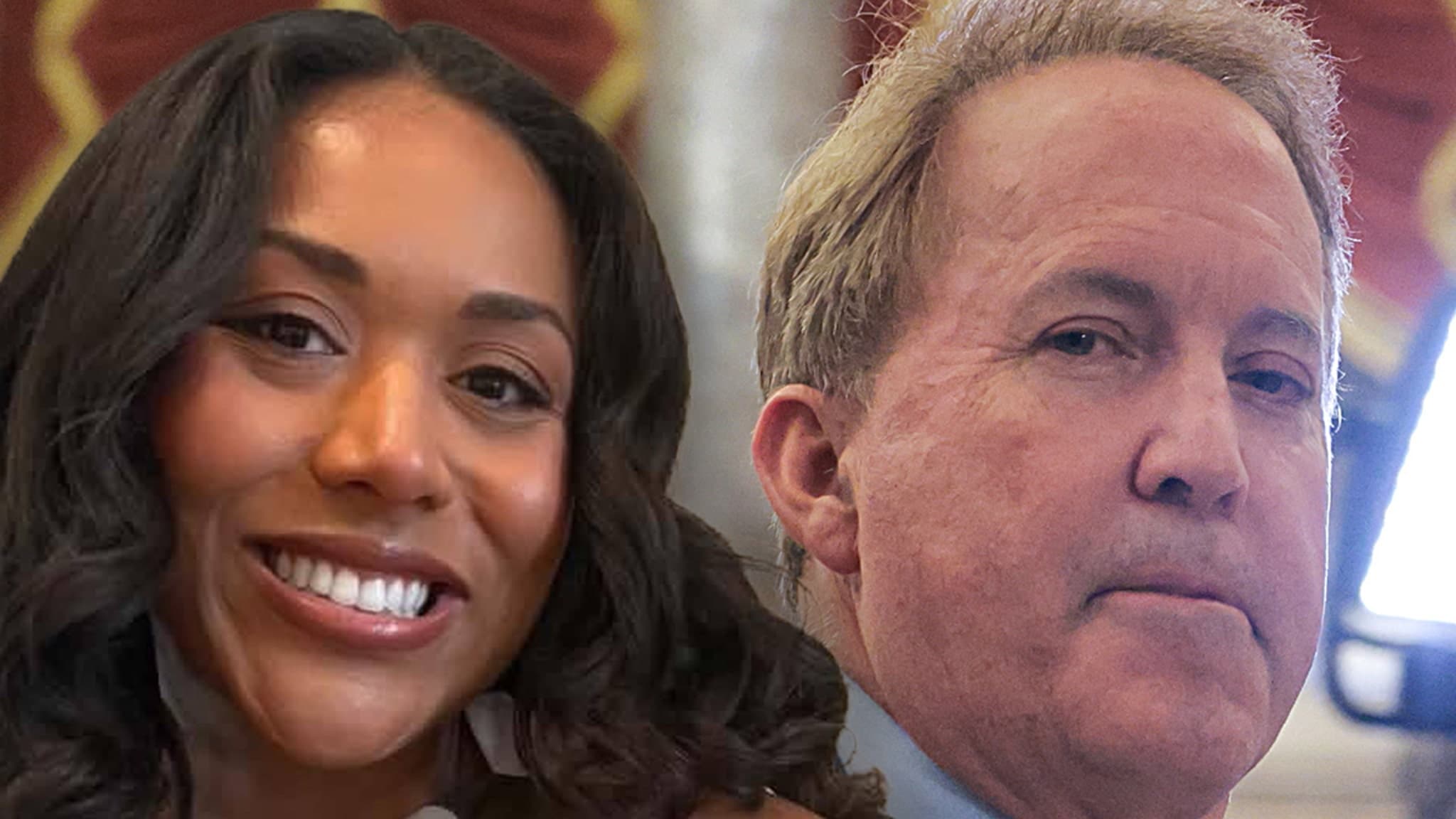
**Texas AG Ken Paxton’s Controversial Intervention in Baby Gabriel’s Custody Battle Sparks Legal and Ethical Outcry** In a case that has sent shockwaves through legal, medical, and reproductive rights circles, Texas Attorney General Ken Paxton has found himself at the center of a bitter custody battle over Baby Gabriel—a newborn whose future now hangs in the balance between his biological parents, a surrogate mother, and the state’s interventionist approach.
The unfolding drama, which began with a surrogacy agreement and spiraled into a high-stakes legal showdown, has reignited debates over parental rights, medical ethics, and the role of government in private family disputes.
As courtrooms buzz with motion after motion and social media erupts with passionate takes, one question looms: How did this case reach such a volatile point, and what does it mean for the future of surrogacy, parental autonomy, and state involvement in child welfare? ### **The Backstory: A Surrogacy Agreement Gone Wrong** The story of Baby Gabriel traces back to a carefully drafted surrogacy contract between Nausheen Gilkar and Omar Ahmed, a couple based in Texas, and McKenna West, their surrogate living in Alaska.
The arrangement, like many in the surrogacy industry, was designed with contingencies—including a clause that allowed the biological parents to request termination of the pregnancy if the child was born with severe defects.
When McKenna gave birth on August 12, the couple reportedly sought to exercise that clause, alleging that the baby had medical complications that warranted termination under the agreement. But here’s where the narrative takes a dramatic turn.
McKenna, who had carried the child for nine months, refused to comply with the termination request. Instead, she named the baby Gabriel and began providing him with medical care in Alaska.
The biological parents, however, maintained that they had never intended to abandon their son but instead wanted time to consult with doctors and make informed decisions about his treatment. What followed was a legal free-for-all.
The biological parents filed for emergency custody, arguing that McKenna was acting in bad faith. Meanwhile, McKenna countered that the couple had no legitimate grounds to deny the child’s life, especially after initially agreeing to the surrogacy.
Enter Texas Attorney General Ken Paxton, whose intervention has now turned the case into a full-blown constitutional crisis. ### **Paxton’s Intervention: A Move That Has Divided Legal Experts** Paxton’s decision to insert himself into the case was unprecedented.
In a series of court filings, the attorney general argued that the biological parents—Nausheen and Omar—posed a risk to Baby Gabriel’s well-being. ," Paxton requested a hearing to appoint a guardian for the baby and determine the next steps for his care. The move was met with immediate backlash.
The biological parents’ legal team fired back, accusing Paxton of overreach, arguing that the state had no standing to intervene in a private family matter. They further claimed that Paxton had violated their constitutional rights by inserting himself into the case without pro.
"This is not a matter for the attorney general’s office," their filings stated. "It belongs in the hands of the Department of Children and Family Services, if anywhere." Legal scholars have been quick to weigh in.
Some argue that Paxton’s intervention, while well-intentioned, sets a dangerous precedent—one where state attorneys general can bypass pro. Others, however, point to the ethical dilemma at the heart of the matter: If a child’s life is at risk due to parental disputes, should the government intervene?
The case has forced courts to grapple with a question that has no easy answer: *At what point does the state’s interest in a child’s welfare override parental rights?* ### **Historical Parallels: When the State Steps In** This isn’t the first time a custody battle involving surrogacy has made headlines.
In 2019, a similar case in California saw biological parents sue their surrogate after she refused to terminate a pregnancy despite a pre-birth agreement. That case, too, ended in courtroom drama, with judges ultimately siding with the surrogate’s right to keep the child.
More recently, in 2023, a New York case involving a same-sex couple and their surrogate devolved into a bitter dispute over whether the intended parents could be forced to accept a child with disabilities.
Those cases, like this one, highlight the legal gray areas in surrogacy contracts—particularly when it comes to termination clauses and the rights of the child once born. What makes the Baby Gabriel case different is the involvement of a high-ranking state official.
Paxton, a polarizing figure in Texas politics, has a history of taking aggressive stances on family law issues. His office has previously weighed in on cases involving foster care, abortion rights, and parental consent laws.
Critics argue that his intervention here is less about the child’s welfare and more about political posturing—an attempt to signal his commitment to "pro-life" values in the face of reproductive rights debates. ### **The Human Element: A Child Caught in the Crossfire** Beyond the legal jargon and political maneuvering, there is one undeniable truth: Baby Gabriel is just an infant, and his future is being decided by adults with vastly different agendas.
McKenna West, the surrogate, has spoken publicly about her shock at the biological parents’ sudden change of heart. "I carried this baby for nine months," she told reporters.
"I loved him from the moment he was born. The idea that they would now say they don’t want him is heartbreaking." Her legal team has framed the case as one of betrayal, arguing that the couple’s initial agreement was a lie—a way to secure a surrogate without ever intending to accept the child.
Nausheen and Omar, meanwhile, maintain that they have always wanted to be parents but were blindsided by the severity of Gabriel’s medical condition. "We never wanted to abandon our child," Omar stated in a court affidavit.
"We just needed time to understand what his prognosis was and how best to care for him." Their legal strategy has focused on portraying themselves as grieving parents who were forced into an impossible situation—one where the state, rather than supporting them, has now become their adversary. ### **Social Media Reactions: A Nation Divided** The case has sparked fierce debates online, with opinions sharply divided along ideological lines.
Pro-life advocates have praised Paxton’s intervention, framing it as a necessary step to protect a vulnerable child from parents who may have changed their minds due to medical concerns. "This is about a baby’s life," one commentator wrote on X (formerly Twitter).
"The state has every right to step in when there’s a risk of harm." On the other side, reproductive rights activists and surrogacy advocates have condemned Paxton’s involvement as government overreach. "This sets a terrifying precedent," wrote one legal expert.
"If the state can intervene in surrogacy disputes, where does it stop?" Social media has been flooded with hashtags like **#JusticeForBabyGabriel** and **#StopGovernmentOverreach**, with users clashing over whether the biological parents’ initial contract should hold more weight than the child’s right to life.
The surrogate’s supporters have also rallied behind her, with many questioning why a woman who carried a child for nine months should now be forced to give him up. "She’s his mother too," reads one widely shared post.
"Why are we erasing her rights?" ### **Industry Impact: What This Means for Surrogacy Moving Forward** The fallout from this case could have lasting consequences for the surrogacy industry.
Many legal experts warn that Paxton’s intervention may make intended parents hesitant to enter surrogacy agreements, fearing that their rights could be overridden by state officials.
Surrogates, too, may face increased scrutiny—with the possibility that future contracts could be challenged on the grounds of "bad faith" if the intended parents later change their minds. Ethicists are also raising concerns about the use of termination clauses in surrogacy agreements.
While such clauses are not uncommon—intended to protect surrogates from being forced to carry a child they don’t want—this case has exposed how easily they can be weaponized. "These contracts are already ethically fraught," said Dr.
Elena Martinez, a bioethics professor at the University of Texas. "If a child is born alive, should the parents really have the right to demand termination?
That’s not just a medical decision—it’s a moral one." ### **The Road Ahead: What’s Next for Baby Gabriel?** As of now, the legal battle is far from over.
The biological parents have been granted a temporary restraining order giving them full decision-making authority over Gabriel’s care, but Paxton’s office has vowed to appeal.
The next court hearing is expected to determine whether the state will be allowed to continue its involvement—or if the case will be handed back to family court. What is clear is that this case will not disappear quietly.
It has already sparked legislative discussions in Texas about how surrogacy contracts should be regulated, with some lawmakers calling for stricter oversight.
Meanwhile, legal scholars are debating whether Paxton’s actions were justified—or if they represent an dangerous expansion of state power into private family matters. For Baby Gabriel, the uncertainty is the most painful part.
Whether he ends up with his biological parents, his surrogate mother, or a court-appointed guardian, one thing is certain: his life will be forever shaped by the legal and ethical battles raging around him. ### **A Cultural Flashpoint** Beyond the legal and medical implications, this case has become a cultural lightning rod.
It forces society to confront uncomfortable questions: *How much autonomy should parents have over a child’s life? Can a contract truly override the bond between a mother and her child?
And when does the state’s role in protecting a child begin?* In an era where reproductive rights, parental rights, and government intervention are already contentious issues, the Baby Gabriel case has added another layer of complexity.
It’s a story that will be studied in law schools, debated in legislative chambers, and dissected by ethicists for years to come. And at the center of it all is a tiny, innocent life—one that should not have to bear the weight of such high-stakes decisions.
For now, the only certainty is that the custody battle is far from over. And as the legal system grapples with the fallout, one thing remains painfully clear: in the end, it is the children who pay the price.
Fisun Başaran
This article was prepared for publication by HotStar Daily and checked for publication requirements under our editorial standards. We review available information and correct material errors when they are identified.
Quick Answers
- What is the latest update on this story?
- In an unexpected twist, the biological parents of Baby Gabriel are lashing out at Texas Attorney General Ken Paxton for his intervention in their custody battle with surrogate McKenna West. According
- Who is this story about?
- This article covers developments related to Texas AG Ken Paxton Faces Backlash Over Intervention in Baby Gabriel's Custody Battle. HotStar Daily's editorial team monitors the story and updates the article as new verified information becomes available.
- Where can I read more about Baby?
- HotStar Daily publishes original reporting on Baby and related entertainment news. Visit the homepage or browse the section dedicated to this story for the latest coverage.
Related topics
More From This Section
Jimmy Butler's baby mama, Kaitlin Nowak, is now living with the NBA star after their contentious legal battle over child custody and support, sources confirm. , Kaitlin recently worked out a parenting
Jimmy Butler and Baby Mama Reach Agreement, Co-Habit After Court Battle
Rashod Bateman's baby mama, Marissa Crumley, has retracted her claim that the NFL player shoved her into a wall or put his hands on her. In an email to Bateman's attorneys, Crumley admitted she made u
Rashod Bateman's Baby Mama Recants Claim of Physical Abuse

Kyle Richards' daughter Farrah Brittany scored an early congratulations from her baby daddy Zach Goldsmith's estranged wife months before his public reveal as the father. Jennifer Hamilton-Goldsmith,