The Man Who Made the Devil’s Locusts: John Boorman’s Unholy Masterpiece of Failure Few films in history have been as
📣 Share this story with your friends
One-click share to WhatsApp, X, Facebook or Reddit — every share brings a new reader.
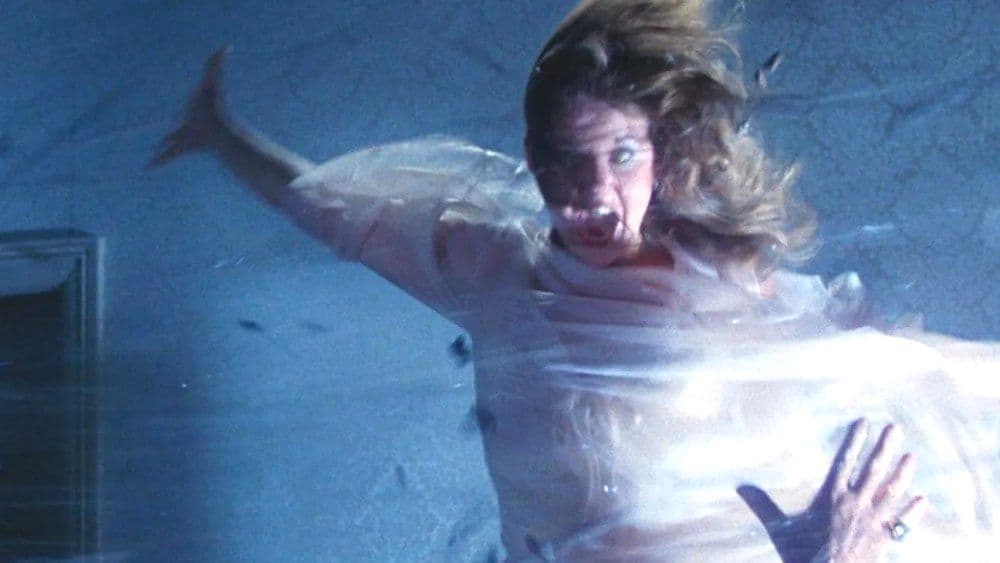
# **The Man Who Made the Devil’s Locusts: John Boorman’s Unholy Masterpiece of Failure** Few films in history have been as reviled, as misunderstood, or as stubbornly defended as *Exorcist II: The Heretic*. When it limped into theaters in the summer of 1977, audiences didn’t just walk out—they laughed.
Not the nervous, uneasy laughter of horror fans, but the full-throated, snorting kind reserved for movies so bad they become legend. The sequel to *The Exorcist*, directed by the once-respected John Boorman, was a disaster so spectacular that even its creator still doesn’t fully grasp why it failed.
Now, nearly half a century later, a new documentary—*Boorman and the Devil*—peels back the curtain on how one of cinema’s most infamous flops was made, and why its director remains baffled by its own downfall.
Boorman, a man who had already delivered the gritty, visceral *Deliverance* and the psychedelic oddity *Zardoz*, approached *Exorcist II* with the same mix of ambition and delusion that defined his career. He wasn’t making a horror movie.
He wasn’t even making a sequel. He was, in his own words, crafting a "meditation on metaphysics," a film about synchronized hypnosis, cosmic consciousness, and the aftermath of demonic possession.
The result was a movie so alien to its source material that it might as well have been set on another planet—one where the devil was played by locusts, Richard Burton delivered lines like *"E-vil… is a spiritual being"* with the gravitas of a funeral director, and Linda Blair’s Regan MacNeil spent most of her screen time doing a confused tap dance in a headband.
The documentary, written and directed by David Kittredge, isn’t just a postmortem of a bad movie—it’s a character study of a man who, despite all evidence, still believes he made something great.
Boorman, now in his nineties, sits in his Irish countryside home, recounting the film’s production with the same earnest conviction he had in 1977. He blames the audience.
He blames the studio. He blames the script.
But what he doesn’t do is blame himself—or at least, not in a way that makes sense. *"I think the problem is that people expected a different kind of movie,"* he says, as if the issue wasn’t that his movie was a baffling, tonally incoherent mess, but that the public had unreasonable expectations.
It’s a defense that reads like a script from a Coen Brothers satire, equal parts self-deprecating and delusional. --- ## **The Making of a Movie That No One Wanted** Boorman’s path to *Exorcist II* was paved with bad decisions from the start.
He had turned down the original *Exorcist*, dismissing it as *"a book about torturing a child."* Fair enough—Boorman had never been one for subtlety, and the idea of demonic possession as a family drama likely struck him as beneath his talents.
But when the sequel came calling, he saw an opportunity not for horror, but for something grander. He wanted to explore *"the next phase of human evolution,"* inspired by the French theologian Pierre Teilhard de Chardin’s theories on cosmic consciousness.
What followed was a film so far removed from *The Exorcist* that it might as well have been a different genre entirely. The script, co-written with Rospo Pallenberg, was a shifting, contradictory beast.
One moment, it was a psychological drama about trauma; the next, it was a metaphysical allegory about humanity merging into a hive mind.
The result was a movie that spent most of its runtime in a dimly lit room, where characters in metal headbands stared at each other while murmuring about *"the collective unconscious."* The synchronized hypnosis scenes, meant to be hypnotic, were instead hypnotically dull.
The film’s only real set piece—a climactic battle between good and evil in a disco-lit warehouse—looked like a rejected scene from a John Waters movie, complete with fake locust swarms that moved with the unnatural precision of a bad special effect. Boorman’s personal life didn’t help.
He fell ill with valley fever after inhaling the imported Ethiopian dirt used for the film’s soundstage sets, shutting production down for weeks. The budget ballooned from $10 million to $15 million, making it the most expensive film Warner Bros. had ever made at the time.
Richard Burton, cast as the Vatican-appointed priest, was reportedly hungover for much of his scenes, delivering his lines with the enthusiasm of a man reading a grocery list. And then there was the matter of the locusts.
The film’s demonic force, Pazuzu, was to be embodied by swarms of the insects, shot from a locust’s-eye perspective using a newly invented Steadicam. The effect was less terrifying than it was ridiculous—like a bad dream you’d have after eating expired hummus.
The most damning evidence of the film’s collapse came during its first sneak preview in Pasadena. The Warner Bros. executives, seated nervously in the back, watched as the audience shifted from confusion to outright laughter.
At one point, a man stood up and shouted at the screen, *"Who made this shit?"* before storming out. The film was pulled from its planned 700-theater release, recut twice, and still managed to lose millions.
Boorman’s response?
He doubled down. *"I still think there are some great moments in it,"* he insists in the documentary, as if the sum of a film’s greatness can be measured in isolated scenes rather than overall impact. --- ## **The Cult of the Bad Movie** If *Exorcist II* had simply been a forgettable flop, it might have faded into obscurity like so many other ’70s misfires.
Instead, it became something stranger: a cult object of fascination. Over the years, critics and filmmakers have tried to rehabilitate it, framing it as a bold, misunderstood experiment rather than the incoherent mess it was.
Pauline Kael, who had famously despised *The Exorcist*, wrote a surprisingly kind review of the sequel, calling its imagery *"spellbinding"*—a move that fit her pattern of embracing inferior sequels as a way of re-engaging with popular culture.
It was an early sign of what would become *"Movie Disaster Rehabilitation Culture,"* a trend where even the worst films, if they’re ambitious enough, get retroactively elevated to the status of *"flawed masterpieces."* Today, *Exorcist II* is often cited alongside *Heaven’s Gate* and *Eyes Wide Shut* as proof that failure can be a kind of greatness.
The argument goes that Boorman, like Michael Cimino or Stanley Kubrick, was so far ahead of his time that the audience simply wasn’t ready. But this defense ignores the most basic rule of filmmaking: if your movie doesn’t work, it doesn’t work.
Boorman’s insistence that *"successful movies have one thing in common, and that’s luck"* is a cop-out.
Luck doesn’t excuse a script that makes no sense, or performances that are wooden, or visuals that look like a high school production of *Dune*. *Exorcist II* wasn’t a misunderstood masterpiece—it was a movie that failed on every level, from its premise to its execution.
Yet there’s something undeniably fascinating about the film’s persistence. It’s not just that it’s bad; it’s that it’s *so* bad that it becomes fascinating.
The locusts, the disco battle, Burton’s deadpan delivery—these aren’t just mistakes, they’re *characteristics*. *Exorcist II* is the cinematic equivalent of a car crash you can’t look away from, a Rorschach test of what happens when ambition and delusion collide. Boorman, for all his flaws, was never a hack.
He made *Deliverance*, one of the most gripping thrillers of the decade. He made *Hope and Glory*, a tender war memoir.
But *Exorcist II* was different.
It wasn’t just a bad movie—it was a movie that defied logic, a sequel that bore no resemblance to its predecessor, a spiritual journey that felt more like a hostage situation. --- ## **The Legacy of Pazuzu** *Boorman and the Devil* doesn’t just retell the story of *Exorcist II*—it forces you to confront the question of why we still care.
Is it because we’re drawn to failure? Because we like to root for the underdog, even when the underdog is wrong?
Or is it because, algorithm-driven content, a movie this unapologetically weird feels like a breath of fresh air?
Boorman, for his part, remains unfazed by the film’s legacy. *"I don’t regret making it,"* he says, as if regret were optional. *"It was an experience."* And that’s the key. *Exorcist II* wasn’t made to be good—it was made to be *Boorman’s*.
It was a vanity project disguised as a sequel, a metaphysical treatise disguised as a horror movie, a disaster disguised as a masterpiece. The documentary doesn’t just document the making of a bad film; it documents the making of a man who, no matter how many times he’s proven wrong, still believes in his own genius.
That’s the real horror of *Exorcist II*—not the locusts, not the disco battle, but the idea that someone this talented could make something this tone-deaf and still walk away thinking he’d done something great. In the end, *Boorman and the Devil* isn’t just about a bad movie.
It’s about the gap between art and ego, between vision and delusion. And if there’s a lesson to be learned from *Exorcist II*, it’s this: sometimes, the devil really is in the details.
In this case, the details were locusts, bad dirt, and a script that made no sense. And yet, somehow, that’s exactly what makes it unforgettable.
Fisun Başaran
This article was prepared for publication by HotStar Daily and checked for publication requirements under our editorial standards. We review available information and correct material errors when they are identified.
Quick Answers
- What is the latest update on this story?
- The Man Who Made the Devil’s Locusts: John Boorman’s Unholy Masterpiece of Failure Few films in history have been as reviled, as misunderstood, or as stubbornly defended as Exorcist II: The Heretic.
- Who is this story about?
- This article covers developments related to The Man Who Made the Devil’s Locusts: John Boorman’s Unholy Masterpiece of Failure Few films in history have been as. HotStar Daily's editorial team monitors the story and updates the article as new verified information becomes available.
- Where can I read more about John?
- HotStar Daily publishes original reporting on John and related entertainment news. Visit the homepage or browse the section dedicated to this story for the latest coverage.
Related topics
More From This Section

The Unraveling: How Milo Yiannopoulos’ Toxic Rhetoric and ICE Detention Exposed a Marriage Built on Control The private hell of Milo Yiannopoulos’ relationship with his estranged husband, John Campbe
The Unraveling: How Toxic Rhetoric and ICE Detention Exposed a Marriage Built on Control

Daveigh Chase's friend and business manager has slammed her mother's attempt to take control of the late actress' estate. John Ryan, who was Daveigh's close associate, rushed to court to object, raisi
Daveigh Chase's Friend Slams Mom's Bid for Control, Cites Estrangement and Financial Mismanagement

The Real Housewives of Beverly Hills star Bozoma Saint John is officially a married woman! Us Weekly can exclusively confirm that she and fiancé Keely Watson tied the knot in a traditional Ghanaian we