A Small-Town Mayor’s Bold Stand: Why One Official Refuses to Lower the Flag for Dolly Parton—and What It Says About
📣 Share this story with your friends
One-click share to WhatsApp, X, Facebook or Reddit — every share brings a new reader.
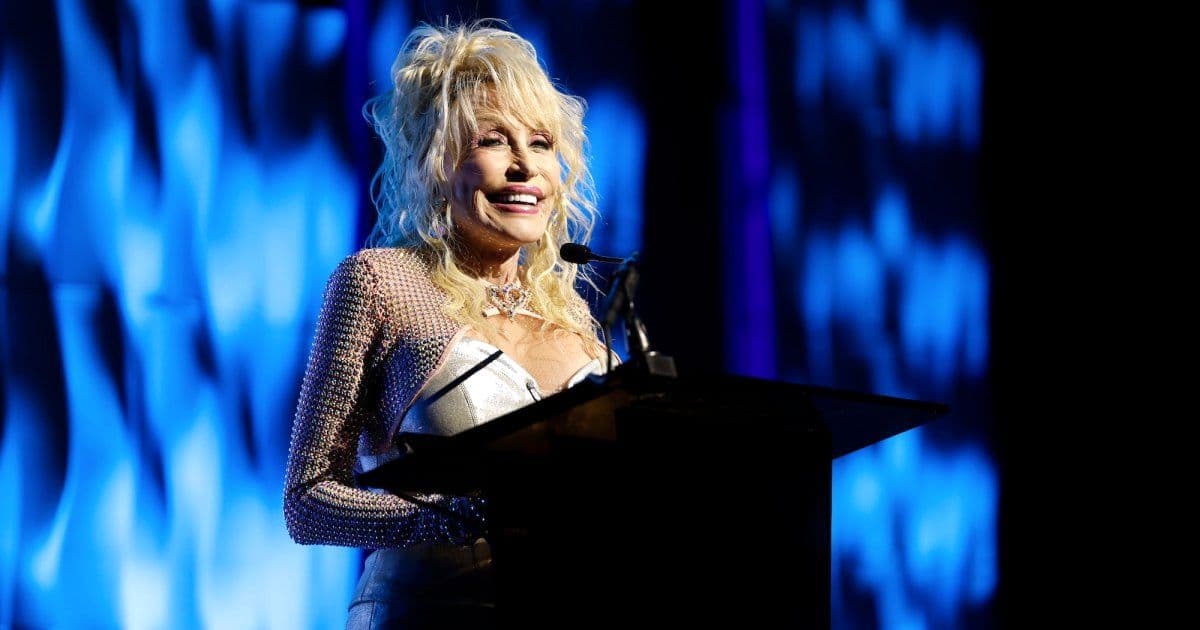
# **A Small-Town Mayor’s Bold Stand: Why One Official Refuses to Lower the Flag for Dolly Parton—and What It Says About America’s Grief** The death of Dolly Parton sent shockwaves through the country, not just for the loss of a musical legend but for the way her passing forced Americans to confront how—and when—they mourn.
While the White House directed all U.S. flags to half-staff in her honor, one Mississippi mayor, Ken Adams of Oliver Branch, quietly defied the order.
His decision, posted on the town’s Facebook page, sparked a national debate: Should the highest symbol of American respect be reserved for presidents, soldiers, and first responders—or should it also fly at half-mast for a woman who shaped the soul of a generation? Adams’ stance is not about dismissing Parton’s legacy.
No one disputes her towering influence: a country music icon, a cultural force, a philanthropist who poured millions into education, healthcare, and the arts. But for Adams, the flag’s meaning has been diluted.
In an era where public tributes often blur the line between reverence and spectacle, he argues that lowering the Stars and Stripes should carry weight—real, measured weight.
His defiance, framed as a matter of local autonomy, has become a lightning rod in a conversation about how a nation decides what deserves solemnity. The debate cuts dee.
It exposes a tension between collective grief and individual judgment, between tradition and the evolving role of public symbols in an age where celebrity and service are increasingly intertwined.
As Parton’s funeral drew thousands to Nashville and her music echoed in homes across America, Adams’ decision forced a question: If we lower the flag for everyone, does it mean anything at all? --- ## **The Flag, the President, and the Mayor’s Defiance** The White House’s directive to lower flags nationwide for Parton was not unprecedented.
Presidents have honored cultural figures before—Aretha Franklin, John Lewis, even Muhammad Ali—but the gesture has rarely been as widely felt. Parton wasn’t just a musician; she was a living emblem of American optimism, a woman who turned coal-mining Appalachia into a global brand while never losing her roots.
Her death, at 80, felt like the end of an era, and the flag’s dip seemed a natural response. But Adams, a mayor in a town of just over 1,000 people in northeastern Mississippi, saw it differently.
His objection wasn’t personal. He praised Parton’s work, noting her generosity and her ability to bring joy to millions.
Yet he drew a line at the flag. “I have nothing but respect for her,” he wrote.
“My concern is different.” The issue, in his view, was one of sacredness. Half-staff isn’t just a gesture; it’s a declaration of national loss.
And if it’s applied too freely, it risks becoming hollow. His argument hinged on local governance.
Mississippi’s Home Rule allows cities to make their own decisions, and Adams framed his choice as a matter of municipal pride. “The President can make the decision for the country.
The Governor can make the decision for the state,” he wrote. “I believe a mayor should have the ability to make a decision for his or her city.” The move wasn’t about opposing the president or disrespecting Parton—it was about preserving the flag’s significance.
“If we lower the flag every time a well-known or beloved person passes away,” he warned, “we eventually lessen the meaning of the gesture.” The timing of his statement—posted just days after Parton’s death—made it all the more striking.
While the country was still processing her loss, Adams’ defiance turned a moment of collective mourning into a political and cultural flashpoint. Critics accused him of insensitivity; supporters praised his principle.
But beneath the backlash was a larger question: In an age where public figures are often treated as demigods, where does reverence end and routine begin? --- ## **What People Are Saying: From Outrage to Unexpected Solidarity** The reaction to Adams’ decision was swift and polarized.
On social media, the outrage was immediate. Parton’s fans, many of whom saw her as more than a musician but a cultural cornerstone, accused Adams of coldness.
Some dismissed his concerns as nitpicking, arguing that the flag’s meaning was subjective. Others took it further, suggesting his stance revealed a disconnect between rural America and the rest of the country.
“How can you not lower the flag for Dolly?” one commenter wrote. “She was a national treasure.” But not everyone agreed.
Some defended Adams, pointing out that the flag’s protocol has always been a matter of debate. The U.S.
Flag Code itself is vague on who qualifies for half-staff, leaving room for interpretation. Veterans’ groups, for instance, have long argued that the flag should only be lowered for those who died in service.
Adams’ position, they noted, aligned with that tradition. “It’s not about Dolly,” one veteran said in an interview.
“It’s about respecting the rules we’ve always followed.” Interestingly, some of the most vocal support came from unexpected places. Local business owners in Oliver Branch reported receiving calls from constituents thanking Adams for his stand.
“People here don’t want the flag lowered for just anyone,” said one shopkeeper. “They think it’s about honor, not hype.” Even in Mississippi, where Parton’s legacy looms large, there was a sense that Adams had struck a chord with those who believe public symbols should mean something.
The debate also highlighted a generational divide. Younger Americans, many of whom grew up with Parton’s music as a soundtrack to their lives, saw the flag as a natural tribute.
Older residents, particularly those with military ties, were more likely to side with Adams. “We’ve lowered the flag for presidents, for soldiers,” said a retired Marine.
“But for a singer?
That’s not what it’s for.” The pushback against Adams, in this view, wasn’t just about Parton—it was about changing norms around what deserves national recognition. --- ## **What Happens Next: The Flag, the Future, and the Fading Line Between Icon and Citizen** Adams’ defiance raises a question that will only grow more pressing: In a country where celebrities often blur the line between public figure and national symbol, how do we decide who gets the flag’s deepest respect?
Parton’s case is extreme, but it’s not an isolated one. Should the flag dip for activists like John Lewis?
For athletes like Muhammad Ali? For entertainers like Whitney Houston or Prince?
The more it’s used, the more the debate over its meaning intensifies. For now, Adams stands by his decision.
Oliver Branch’s flags remain at full staff, and the mayor has faced no backlash from the state or federal government. But the controversy has already sparked conversations about flag protocol.
Some lawmakers have suggested revisiting the guidelines, while veterans’ groups have renewed calls for stricter rules. The debate, in other words, isn’t going away.
What’s clear is that Adams’ stance reflects a broader unease about how America mourns. In an era of viral tributes and 24-hour news cycles, the line between grief and performance has never been thinner.
The flag, once a universal symbol of loss, now risks becoming just another item in the cultural news feed. Adams’ refusal to lower it for Parton isn’t an attack on her legacy—it’s a plea to remember what the gesture was meant to represent in the first place.
As for Parton’s own legacy, it endures. Her music, her philanthropy, her unshakable charm—none of that has faded.
But the debate over the flag reveals something deeper: In a nation that loves its symbols, the question isn’t just about who deserves them. It’s about what they’re worth.
Fisun Yildirim
This article was prepared for publication by HotStar Daily and checked for publication requirements under our editorial standards. We review available information and correct material errors when they are identified.
Quick Answers
- What is the latest update on this story?
- A Small-Town Mayor’s Bold Stand: Why One Official Refuses to Lower the Flag for Dolly Parton—and What It Says About America’s Grief The death of Dolly Parton sent shockwaves through the country, not
- Who is this story about?
- This article covers developments related to A Small-Town Mayor’s Bold Stand: Why One Official Refuses to Lower the Flag for Dolly Parton—and What It Says About. HotStar Daily's editorial team monitors the story and updates the article as new verified information becomes available.
- Where can I read more about Parton?
- HotStar Daily publishes original reporting on Parton and related entertainment news. Visit the homepage or browse the section dedicated to this story for the latest coverage.
Related topics
More From This Section
The Last Hug: How Dolly Parton’s Niece Found a Mother in the Mountains The call came at 4 a.m., just like always. For Lainey Parton, it was the sound of her phone lighting up that meant the world—her
The Last Hug: How Dolly Parton’s Niece Found a Mother in the Mountains The call came at 4 a.m., just like always. For
Dolly Parton’s Legacy: A Life in Song, Love, and Unshakable Belief The world lost one of its brightest stars on August 25, when country music’s most enduring icon, Dolly Parton, passed away at 80 aft
Dolly Parton’s Legacy: A Life in Song, Love, and Unshakable Belief The world lost one of its brightest stars on August
Kenan Thompson Steps In as America’s Got Talent’s New Face—But Will He Stay? The America’s Got Talent judges’ table just got a lot funnier. When Simon Cowell announced his temporary absence from the