The Night Nashville Wept: How the Grand Ole Opry Honored Dolly Parton’s Legendary Life The Grand Ole Opry’s stage in
📣 Share this story with your friends
One-click share to WhatsApp, X, Facebook or Reddit — every share brings a new reader.
# **The Night Nashville Wept: How the Grand Ole Opry Honored Dolly Parton’s Legendary Life** The Grand Ole Opry’s stage in Nashville has seen its share of legends—Johnny Cash’s deep baritone, Patsy Cline’s haunting vocals, George Jones’ raw emotion—but nothing in recent memory matched the weight of the tribute paid to Dolly Parton last Saturday night.
In a rare, unscheduled moment of collective grief and reverence, the institution that had been Parton’s home for over five decades turned its spotlight on her life, her music, and the indelible mark she left on country music and beyond.
The evening wasn’t just a performance; it was a eulogy, a love letter, and a reminder of why Parton’s influence stretches far beyond the genre she helped define. Parton’s passing at 80 last week sent shockwaves through Nashville, a city that had long treated her as its own.
Her death wasn’t just the end of a career—it was the fading of a cultural force, one whose fingerprints are on everything from the Grand Ole Opry’s history to the very soul of American music. The Opry’s decision to dedicate an entire show to her wasn’t just a gesture; it was a necessity.
For generations of country fans, Parton wasn’t just a star—she was the heart of the sound. And on that Saturday night, as the twang of her songs filled the Ryman Auditorium, it became clear why.
The evening began with a quiet promise: proceeds from every ticket sold would go to Parton’s Imagination Library, the literacy program that has touched millions of children worldwide. It was a fitting tribute—Parton’s generosity was as much a part of her legacy as her rhinestone-encrusted stage outfits.
But the real magic unfolded when the night’s performers took the stage, each choosing songs that spoke to Parton’s genius in different ways. --- ## **A Stage Full of Stars, All Singing in Her Key** The night’s lineup read like a who’s who of modern country, but more than that, it was a family reunion.
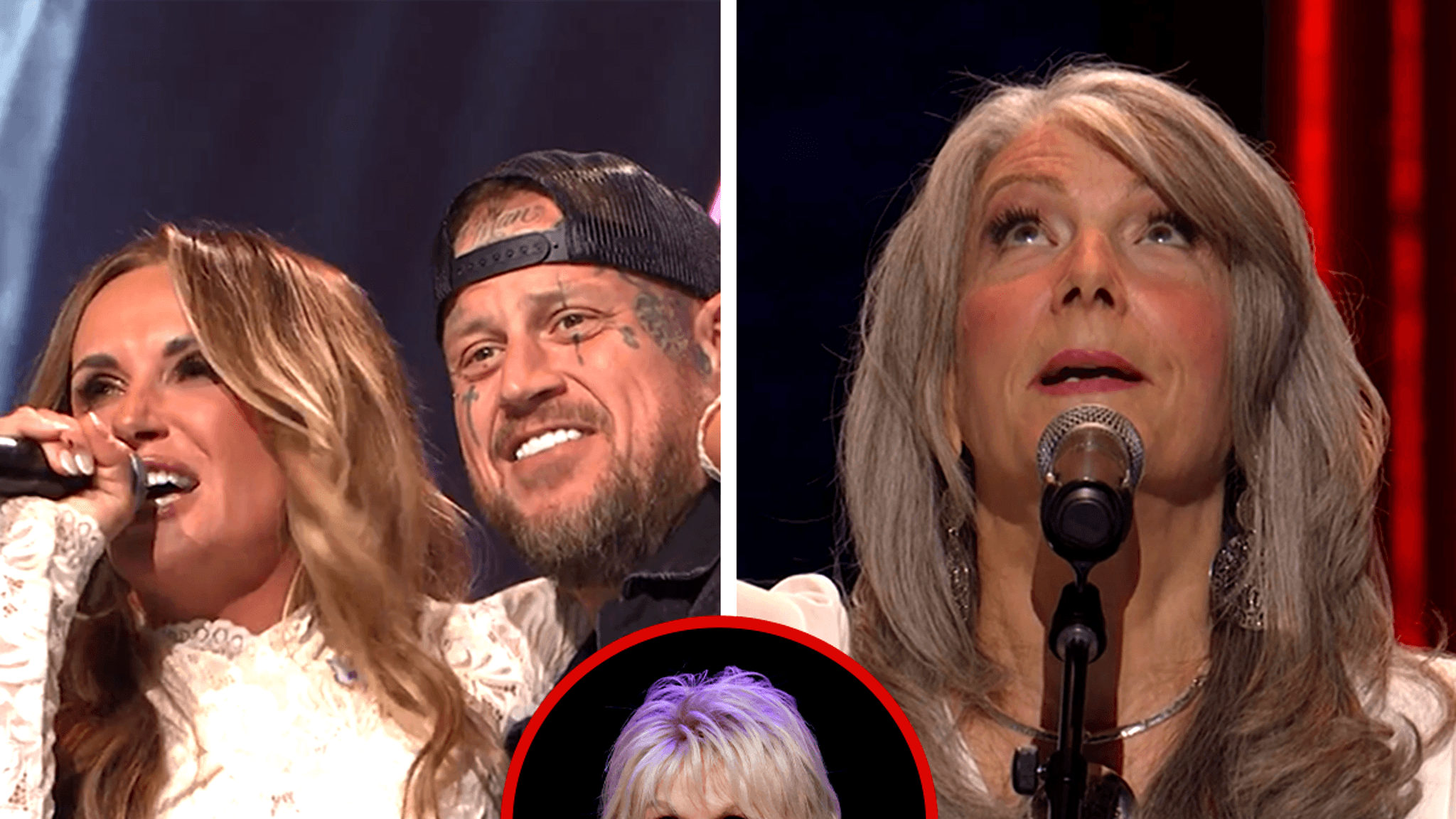
Carly Pearce, who got her start at Dollywood and was personally invited into the Opry by Parton in 2021, opened with *"Those Memories of You,"* a song that carried the weight of mentorship and gratitude.
Standing in front of the same crowd that had once cheered for Parton herself, Pearce’s voice trembled—not just with emotion, but with the understanding that she was carrying on a legacy. When she finished, the applause wasn’t polite; it was reverent.
Kathy Mattea, a veteran of Nashville’s outlaw country scene, followed with *"Jolene,"* a song Parton wrote in 1973 that has since become a universal anthem of longing. Mattea’s delivery was measured, almost sacred, as if she were reading from a hymnal.
Then came Ketch Secor and Molly Tuttle, two artists who’ve spent careers pushing country music into fresh territory, teaming up on *"Just Someone I Used to Know."* Their harmonies wove together seamlessly, how Parton’s influence transcends eras—whether you’re a traditionalist or a genre-bender, her songs feel like home.
But the real emotional gut-punch came from Dan Tyminski, who dedicated *"Smile When You’re Alone"* to Parton. *"I can’t think of a voice that would’ve been more perfect for this song,"* he said, his own voice rough with feeling.
The song, a rare ballad from *The Hunger Games* soundtrack, had never been strongly associated with Parton, but Tyminski’s choice was telling. It wasn’t just about the music; it was about the way Parton’s life—her resilience, her humor, her ability to find joy in hardship—mirrored the song’s themes.
The night’s performances weren’t just about nostalgia; they were about succession. T.
Graham Brown, a rising star with a voice like warm honey, sang *"Beulah Land,"* a gospel-tinged classic that Parton herself had recorded. Belle Frantz, making her Opry debut, delivered *"Where No One Stands Alone"* with a voice that carried the same fire Parton brought to her advocacy work.
And then there was Channing Wilson, who closed his set with *"My Tennessee Mountain Home,"* a song so deeply tied to Parton’s roots that it might as well have been a hymn. The most unexpected moment came when Jada Star, Parton’s niece, stepped onto the stage.
Her performance of *"The Orchard"* was raw, unpolished in the way that only family can be. There were no flashy costumes, no grand gestures—just a woman singing a song her aunt wrote, her voice cracking with emotion.
It was the kind of moment that made the audience lean in, as if they were hearing Parton herself whis. --- ## **The Finale: A Thousand Voices, One Heartbreak** By the time the performers gathered for the finale, the air in the Ryman was thick with the kind of quiet that only comes when a crowd is holding its breath.
They launched into *"9 to 5,"* the song that turned Parton’s workplace frustrations into a feminist anthem. The energy shifted from sorrow to something closer to celebration—because even in grief, there was a sense of pride in what Parton had built.
The crowd sang along, their voices rising in unison, as if to say, *"We remember. We’re still here."* Then, without warning, Jelly Roll—Opry member, rapper, and one of country’s most unpredictable stars—stumbled onto the stage.
His appearance was pure chaos in the best way, a reminder that Parton’s world was never just one thing. He joined the group mid-song, his rap verses clashing and colliding with the country harmonies in a way that only felt right.
The audience erupted, not because it was unexpected, but because it *felt* like Dolly—unpredictable, generous, and impossible to pin down. The night’s true closer wasn’t a song, but a video.
As the performers and backstage guests gathered, the screens behind them flickered to life, showing Parton performing *"I Will Always Love You"* in a moment that must have been recorded years ago. The camera caught her laughing, her hands gesturing as she sang, her presence as vibrant as ever.
For a few minutes, the room was silent.
Then, as the last notes faded, the audience rose as one, a standing ovation that wasn’t just for the woman on screen, but for the woman who had shaped them all. --- ## **What Comes Next for Nashville—and for Us** The Grand Ole Opry’s tribute wasn’t just a farewell; it was a reckoning.
Parton’s death forced Nashville to confront what it would lose—not just a superstar, but the very spirit of the city’s musical identity. She was the bridge between the Opry’s golden age and the modern era, the woman who made country music feel both timeless and alive.
Without her, the genre has to ask itself: *What do we do now?* For the artists who performed that night, the answer seems clear. They’re not just carrying on her music; they’re inheriting her ethos.
Pearce, Mattea, Tyminski—they’re all part of a new generation that understands Parton wasn’t just about hits, but about heart. The way they sang her songs wasn’t with reverence alone, but with the knowledge that they had to fill the shoes she left behind.
And in a city that thrives on legacy, that’s no small task. For the rest of us, the tribute was a reminder that Parton’s greatest gift wasn’t just her voice, but her ability to make us feel seen.
Whether through her songs, her philanthropy, or her sheer, unapologetic joy, she gave us permission to be unfiltered, to laugh loud, and to love without reservation. The Grand Ole Opry’s stage may have dimmed after she left it, but her light didn’t go out.
It just got passed along. And that, more than anything, is what Nashville—and country music—will remember.
Fisun Yıldırım
This article was prepared for publication by HotStar Daily and checked for publication requirements under our editorial standards. We review available information and correct material errors when they are identified.
Quick Answers
- What is the latest update on this story?
- The Night Nashville Wept: How the Grand Ole Opry Honored Dolly Parton’s Legendary Life The Grand Ole Opry’s stage in Nashville has seen its share of legends—Johnny Cash’s deep baritone, Patsy Cline’s
- Who is this story about?
- This article covers developments related to The Night Nashville Wept: How the Grand Ole Opry Honored Dolly Parton’s Legendary Life The Grand Ole Opry’s stage in. HotStar Daily's editorial team monitors the story and updates the article as new verified information becomes available.
- Where can I read more about Grand?
- HotStar Daily publishes original reporting on Grand and related entertainment news. Visit the homepage or browse the section dedicated to this story for the latest coverage.
Related topics
More From This Section
The Last Hug: How Dolly Parton’s Niece Found a Mother in the Mountains The call came at 4 a.m., just like always. For Lainey Parton, it was the sound of her phone lighting up that meant the world—her
The Last Hug: How Dolly Parton’s Niece Found a Mother in the Mountains The call came at 4 a.m., just like always. For
A Small-Town Mayor’s Bold Stand: Why One Official Refuses to Lower the Flag for Dolly Parton—and What It Says About America’s Grief The death of Dolly Parton sent shockwaves through the country, not
A Small-Town Mayor’s Bold Stand: Why One Official Refuses to Lower the Flag for Dolly Parton—and What It Says About
The Grand Canyon’s Dark Flood: When the Sky Turned Brown and the River Vanished The Grand Canyon is a place of quiet majesty, where the earth’s ancient bones rise from the desert in layers of red and