John Galliano is out of Met Gala 2027 after intense backlash over antisemitism
📣 Share this story with your friends
One-click share to WhatsApp, X, Facebook or Reddit — every share brings a new reader.
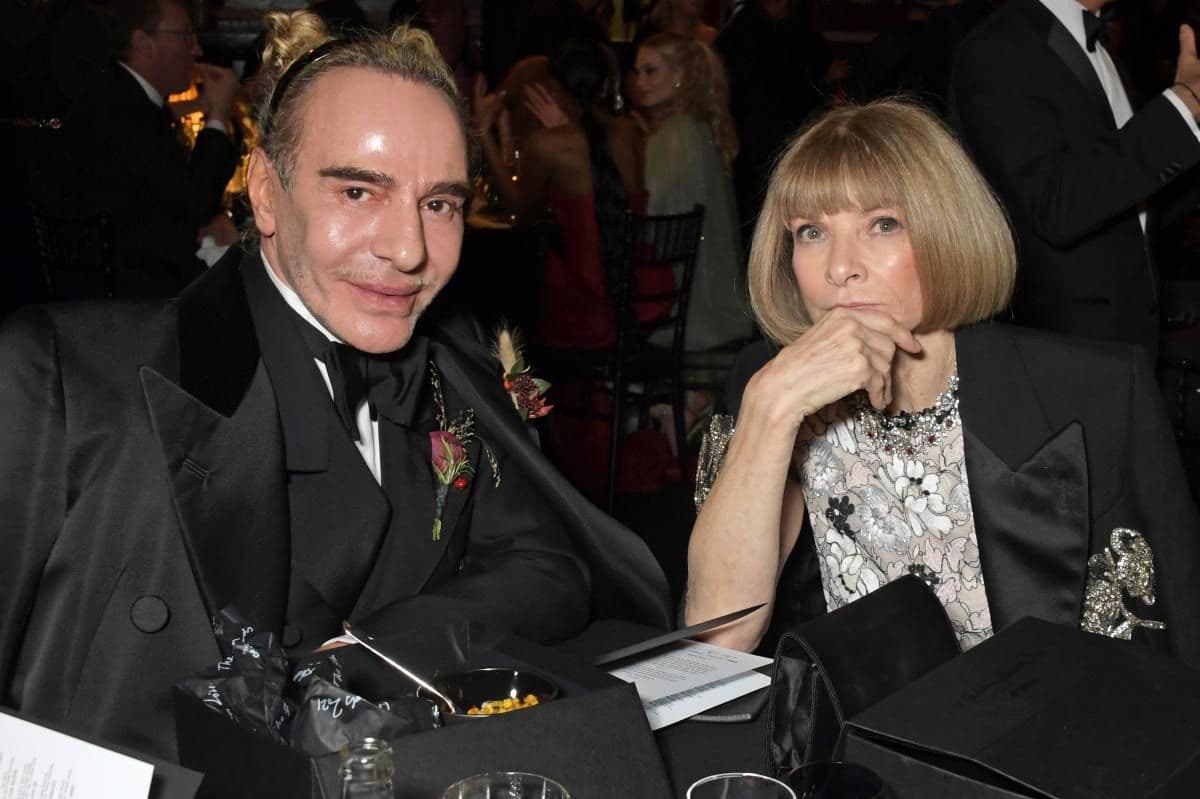
**The Fall of a Fashion Icon: Why the Met Gala Dropped John Galliano Amid Scandal** The Metropolitan Museum of Art’s most anticipated event of the year—the Met Gala—has been reshaped by controversy.
John Galliano, the once-unassailable French designer whose work defined an era of haute couture, will no longer be honored at the 2027 edition of the Costume Institute’s gala.
His name has been removed from the exhibition *John Galliano: Horizons*, a retrospective that was set to celebrate his decades of influence over fashion.
The decision comes after a storm of backlash, institutional pressure, and a reckoning with the designer’s long-buried past—one marked by antisemitic and racist remarks captured on video in 2011.
Galliano’s abrupt withdrawal, announced in a rare public statement, marks the end of an era not just for his career, but for the museum’s ability to navigate the fraught intersection of art, legacy, and accountability.
The scandal forces a reckoning: Can institutions elevate figures whose work is undeniably brilliant but whose personal histories are irredeemably toxic?
The Met Gala, under the stewardship of Anna Wintour, has long been a platform for celebrating the most boundary-pushing talents in fashion—from Alexander McQueen’s theatricality to Iris van Herpen’s futurism. But Galliano’s case is different.
His 2011 outburst, in which he hurled slurs at patrons in a Paris café, was not a fleeting moment of anger but a pattern of behavior that resurfaced in private conversations over the years.
The video, which circulated quietly before resurging in recent weeks, revealed a man whose genius in design coexisted with a deep-seated bigotry. The question now is whether the Met, a bastion of cultural authority, can separate the art from the artist—or if some legacies are too tarnished to preserve.
The timing of the controversy could not be more fraught. The exhibition was scheduled for May 1, 2027—Yom HaShoah, Holocaust and Heroism Remembrance Day, a date that turned the museum’s plans into a moral minefield.
Donors, trustees, and Jewish community leaders had begun mobilizing, threatening to withdraw support if the event proceeded as planned. The pressure was relentless: How could the Met honor a man whose words had caused lasting pain to the very communities the museum claims to uplift?
Galliano’s decision to cancel, framed as a gesture of respect, was less about personal regret and more about survival. The museum, caught between artistic integrity and institutional damage control, ultimately sided with pragmatism.
But the fallout will linger, raising questions about who gets to decide what stays in the past—and what must be confronted. --- ## **The Weight of a Legacy: Galliano’s Rise and the Cost of Redemption** John Galliano’s career was nothing short of meteoric.
When he took the helm at Givenchy in 1996, he transformed the house into a powerhouse of avant-garde romance, blending historical references with a raw, emotional intensity. His 1997 spring collection, featuring models in sheer, draped fabrics and dramatic makeup, was a revelation.
Critics hailed him as a visionary, and the fashion world fell in love with his theatricality. By 2004, he became creative director of Dior, where he redefined the brand’s aesthetic with a mix of vintage and modern edge.
His 2005 *Bar Suite* collection, a homage to 1970s Parisian nightlife, became legendary, cementing his place as one of the most influential designers of his generation. Yet beneath the surface of his success lay a darker reality.
Galliano’s personal life was marked by instability—alcoholism, erratic behavior, and a reputation for alienating those around him. The 2011 incident in a Paris café, where he was caught on camera shouting antisemitic remarks, was not an isolated episode.
Former colleagues and friends described a man whose brilliance was matched by a volatile temper. When the video resurfaced in 2023, it reignited debates about whether his talent should be separated from his transgressions.
The fashion industry, which has long struggled with its own complicity in enabling toxic behavior, was forced to confront a fundamental question: Can a genius whose work has shaped an entire generation be forgiven—or should their legacy be erased? The Met’s decision to honor Galliano was always controversial.
The museum’s Costume Institute, under Wintour’s leadership, has a history of celebrating designers long after their careers have faded, turning retrospectives into acts of preservation. But Galliano’s case was different.
His 2011 remarks were not ancient history; they were a stain that refused to fade. The museum’s initial silence on the matter only fueled speculation that the institution was prioritizing artistic legacy over moral accountability.
When the backlash intensified, with donors threatening to pull funding and community leaders demanding answers, the Met had no choice but to act.
Galliano’s withdrawal was not just a personal retreat—it was a surrender to the reality that some legacies are too heavy to carry. --- ## **The Backlash: Donors, Trustees, and the Unraveling of Institutional Trust** The controversy over Galliano’s exhibition exposed deep fractures within the Met’s inner circles.
Trustees and board members, many of whom are major donors themselves, found themselves in an impossible position. On one hand, they were expected to uphold the museum’s reputation as a cultural beacon.
On the other, they faced pressure from donors—some of whom are prominent Jewish philanthropists—who saw the exhibition as a betrayal. The threat of rescinded gifts was not idle; in an era where museums rely heavily on private funding, the financial stakes were high.
The New York Times reported that internal discussions at the Met had grown increasingly tense, with some trustees arguing that the exhibition should proceed as planned, while others insisted it was a moral imperative to cancel. Publicly, the museum maintained a measured tone, but privately, the panic was palpable.
The scheduling of the exhibition on Yom HaShoah was particularly galling to Jewish community leaders, who saw it as a deliberate oversight—or worse, a lack of sensitivity. The Anti-Defamation League and other advocacy groups had begun circulating petitions demanding the Met reconsider.
The pressure was not just about Galliano’s past remarks but about the museum’s broader role in shaping cultural narratives. If the Met could not draw a line between a designer’s art and their personal demons, what did that say about its values?
Galliano’s own statement, posted on Instagram, was a masterclass in damage control. He acknowledged his past words, expressed remorse, and framed his withdrawal as an act of respect.
But the statement did little to assuage critics who saw it as performative. The fashion world, too, was divided.
Some designers, like Marc Jacobs, publicly defended Galliano, arguing that his talent should not be dismissed. Others, like Stella McCartney, called for a reckoning, insisting that the industry could not continue to ignore its own complicity in enabling toxic behavior.
The debate was not just about Galliano—it was about the future of fashion itself. Could the industry move forward without confronting its past? --- ## **What Comes Next: The Met’s Reckoning and the Future of Fashion’s Legacy** With Galliano’s exhibition canceled, the Met now faces the task of rebuilding trust.
The museum’s statement, released after Galliano’s announcement, was carefully worded, offering Wintour’s support while leaving room for a new direction. The Costume Institute has promised to announce a replacement exhibition in the coming months, but the damage has already been done.
The incident has laid bare the institution’s vulnerabilities—its reliance on donors, its struggle to balance artistic vision with ethical responsibility, and its tendency to look the other way when it comes to the personal failings of the geniuses it elevates. For Galliano, the fallout is far from over.
His career has already been in decline since his firing from Dior in 2011, but this latest controversy threatens to bury him entirely. The fashion world, once eager to embrace his return, now seems reluctant to engage.
His label, John Galliano Paris, continues to operate, but without the backing of major retailers or high-profile collaborators. The question remains: Can he ever reclaim his place in the industry, or is this the end of an era?
The broader implications for fashion are even more significant. The industry has long prided itself on being ahead of the curve, but when it comes to accountability, it has often lagged behind.
Galliano’s case forces a reckoning: How much weight should a designer’s past mistakes carry? Can institutions like the Met continue to celebrate figures whose legacies are tainted by bigotry, or is it time to draw a harder line?
The answers will shape not just the future of the Met Gala, but the entire industry’s relationship with its history—and its conscience.
Fisun Yıldırım
This article was prepared for publication by HotStar Daily and checked for publication requirements under our editorial standards. We review available information and correct material errors when they are identified.
Quick Answers
- What is the latest update on this story?
- The Fall of a Fashion Icon: Why the Met Gala Dropped John Galliano Amid Scandal The Metropolitan Museum of Art’s most anticipated event of the year—the Met Gala—has been reshaped by controversy. John
- Who is this story about?
- This article covers developments related to John Galliano is out of Met Gala 2027 after intense backlash over antisemitism. HotStar Daily's editorial team monitors the story and updates the article as new verified information becomes available.
- Where can I read more about John?
- HotStar Daily publishes original reporting on John and related entertainment news. Visit the homepage or browse the section dedicated to this story for the latest coverage.
Related topics
More From This Section
The Met Gala’s Unraveling: How John Galliano’s Controversy Forced a Last-Minute Retreat The Met Gala, the most high-profile night in fashion, has always been a stage for spectacle—, power, and the oc
The Met Gala’s Unraveling: How John Galliano’s Controversy Forced a Last-Minute Retreat The Met Gala, the most
The Man Who Made the Devil’s Locusts: John Boorman’s Unholy Masterpiece of Failure Few films in history have been as reviled, as misunderstood, or as stubbornly defended as Exorcist II: The Heretic.
The Man Who Made the Devil’s Locusts: John Boorman’s Unholy Masterpiece of Failure Few films in history have been as
The Unraveling: How Milo Yiannopoulos’ Toxic Rhetoric and ICE Detention Exposed a Marriage Built on Control The private hell of Milo Yiannopoulos’ relationship with his estranged husband, John Campbe